By understanding the difference between logo design and corporate branding, you'll see why your business needs more than just a symbol to win hearts, minds, and market share.
Have you ever walked into a Bunnings Warehouse on a Saturday morning and felt that immediate, comforting wave of familiarity? Is it the smell of the sausage sizzle, the sea of green aprons, or that massive red hammer logo?
It’s all of it. That bold red hammer is just the logo. Everything else – the smell, the service, the feeling of DIY empowerment – that is the brand. Many hard-working business owners stare at a freshly minted JPEG of their new logo, asking themselves, Is this going to magically make the phones ring?
The short answer is no. A logo alone cannot shoulder the heavy lifting of building trust. It cannot reassure a grieving family arranging a funeral, nor can it alleviate the fear of a first-time homebuyer. To really understand how to move the needle, we have to unpack the difference between logo design and corporate branding.
Why has the focus shifted from logos to branding?
Let’s get straight to it. A logo is a single, specific graphical element. It might be a symbol, a custom wordmark, or a combination of both. It is a vital asset, but it is just one piece of a much larger puzzle.
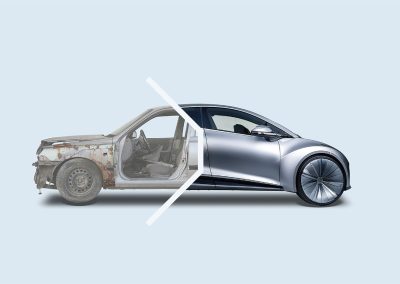
Corporate branding is the comprehensive system that begins with your organisation’s personality and values. This is the strategic foundation for how your brand expresses itself: what you say, how you say it, how you look, how you sound, across every touchpoint of the customer experience. If your logo is the shiny hood ornament on a classic Holden Commodore, your corporate branding is the roaring V8 engine and the exhilarating feeling of the wind rushing past on the Pacific Highway.
A well-intentioned startup founder might spend thousands of dollars on a beautiful logo, completely neglecting the brand’s tone of voice or customer onboarding process. They end up with a beautiful shell that rings hollow.
“A brand is not a logo. A brand is not an identity. A brand is a person’s gut feeling.”
Marty Neumeier, The Brand Gap
The Identification vs. Emotion Tug-of-War
Why do we even have logos?
Identification.
A logo acts precisely like a visual name tag, ensuring customers recognise the business instantly. When scanning crowded supermarket shelves for a product, your brain looks for that specific shape and colour. Boom. Found it. But identification is not affection.
Corporate branding deals with the emotional connection. It is the invisible force that shapes your overall reputation and dictates exactly how people feel about you. Imagine you are at a networking event in Sydney. Someone walks up wearing a name tag that says “John”. That’s the logo. But as John speaks, he’s rude and constantly interrupts. Your emotional reaction to John – your immediate distrust – that is the brand experience.
People fall in love with personalities, not name tags. Consider the comedic genius of Kath & Kim. If you just looked at their ‘logo’, you'd get a sense of who they are. But the brand is the shrill “Look at moy,” the leopard print, and the relentless pursuit of being ‘effluent’. Branding dictates how your audience feels, the empathy you show, and the relief you provide.
The Finished Artefact vs. The Living Ecosystem
Here is a hard truth about logo design. It is a finite deliverable.
Once a logo is meticulously designed and exported, it is largely finished. It is locked in a digital vault, finalised once, and rarely altered. It is static. Corporate branding is entirely different. Branding is a living, breathing ecosystem that constantly evolves as your business grows and as cultural landscapes change. It is the difference between a birth certificate and a rich life story.
A naive marketing manager might commission a style guide, put it in a drawer, and assume the job is done for the next decade. They forget that branding is a daily, disciplined practice. A static logo doesn’t comfort a client when things go wrong. Imagine a logistics company facing a massive supply chain crisis. The logo on their trucks isn't doing any heavy lifting. What saves them is their brand: their history of transparent communication and their honest tone of voice in crisis emails.
Some executives mistakenly believe that paying for a logo redesign will magically fix systemic customer service issues. The logo is just the fresh coat of paint; the brand is the structural integrity of the house.
“A logo derives meaning from the quality of the thing it symbolises, not the other way around.”
Paul Rand, Design, Form, and Chaos
Sight vs. The Full Sensory Experience
We are highly visual creatures, but we live in a vibrantly multi-sensory world. A logo is exclusively visual. You can look at it. You can print it. That’s it.
Corporate branding, however, is intensely multi-sensory and experiential. It includes the tone of voice in your copywriting – whether you sound like an unapproachable corporate bureaucrat or a warm, seasoned ally. It includes potent audio cues, like the reassuring hold music you play when valued customers call your support line.
It even extends powerfully to the tactile experience. Think about buying a high-end bottle of wine. The heavy, textured paper stock and the crisp sound of the seal breaking were meticulously engineered by brand designers who understand that trust is built through the fingertips.
Have you ever stepped onto a Qantas flight after a long stint overseas? The visual of the flying kangaroo is one thing. But the true brand experience is the familiar Aussie accent over the intercom and catching up on the footy scores with the flight attendant. A purely visual logo simply cannot replicate that depth of feeling.
When an inexperienced business owner hands over a flimsy business card that feels like cheap takeaway menu paper, they completely undermine the premium service they are selling. By embracing the multi-sensory nature of corporate branding, you transform a mundane transaction into a deeply resonant experience.
The final word on the difference between logo design and corporate branding
So, what is the real difference between logo design and corporate branding?
A logo tells people your name; branding tells them exactly why they should care.
As you navigate the fiercely competitive landscape of your industry, remember that you are building so much more than a visual identifier. You are building a secure vessel for trust, a potent remedy for your clients' fears, and a reliable beacon of absolute professionalism. By investing deeply and authentically in your corporate branding, you position yourself not just as a viable choice, but as the only choice. Now, build a powerful brand that continues to resonate long after the name tag comes off.